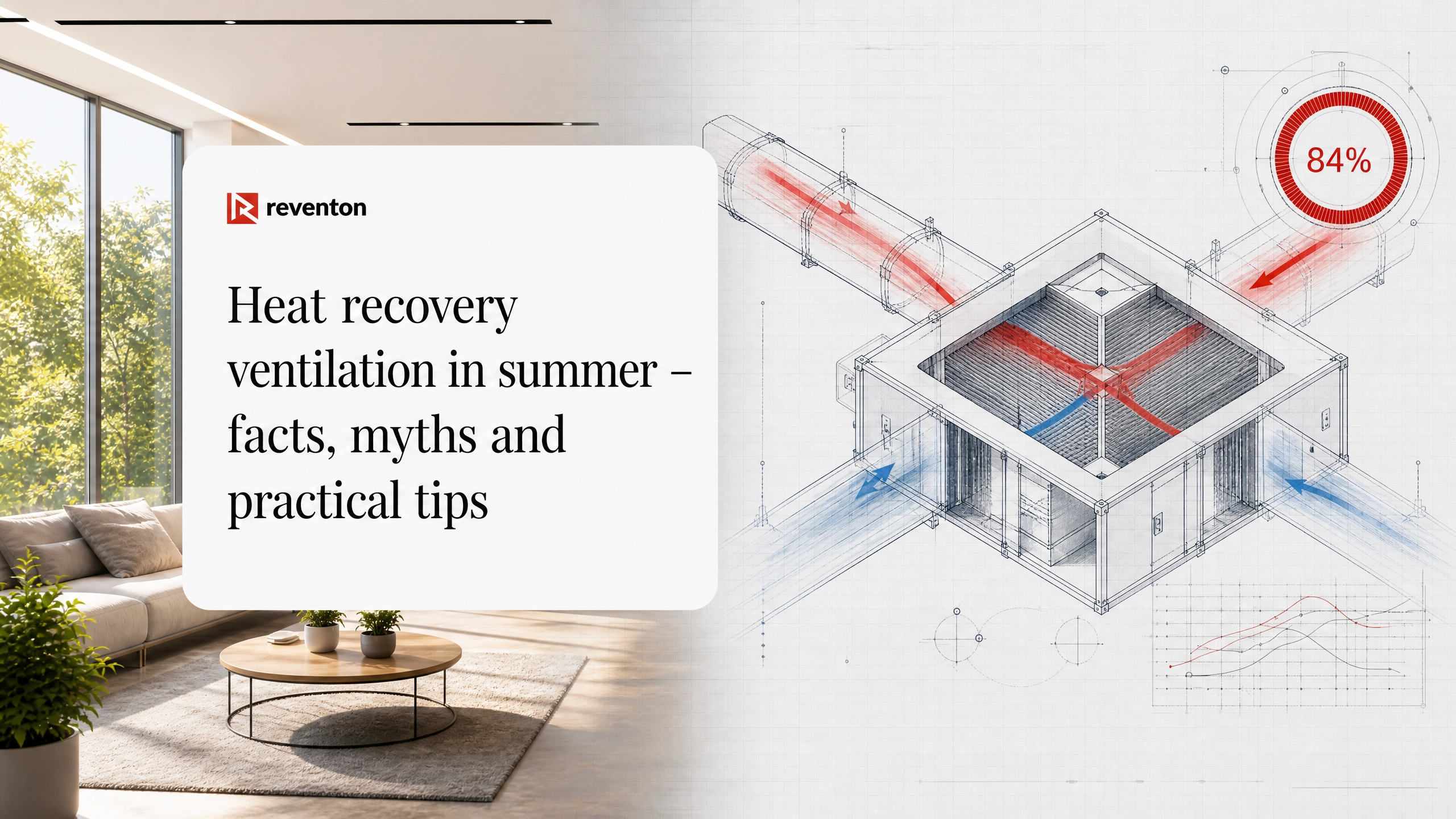
Does mechanical ventilation with heat recovery come in useful during summer heatwaves? Many people still believe that heat recovery is a system that only makes sense in winter, to save on heating costs. That is a mistake.
In this article we explain how the system behaves during the summer months, debunk the most common myths and show you how to set your ventilation unit optimally when the sun is beating down.
How does heat recovery work when it is hot outside?
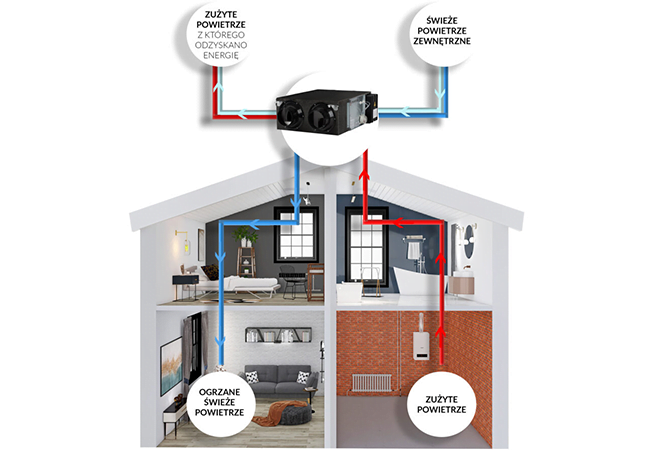
To understand how a heat recovery unit operates in summer, we need to look at the physics behind it. In winter, the unit recovers heat from the air extracted from the house and transfers it to the cool air supplied from outside. In summer, this heat recovery process is usually undesirable – after all, we do not want to further warm up the air entering the building.
However, the situation reverses when air conditioning is running in the house. The indoor temperature is then lower than outside. The heat exchanger in the recovery unit (with the bypass closed) begins to “recover coolness”. Hot outdoor air is pre-cooled by the cool air extracted from the air-conditioned rooms.
The magic of the summer bypass
The bypass (which routes air around the heat exchanger) is an absolutely key feature for summer. Opening it means that the outdoor air bypasses the heat exchanger and goes straight into the rooms.
Why does this matter so much? The bypass is invaluable on summer nights. When the outdoor temperature finally drops below that inside the overheated house, we want to push crisp, fresh air indoors. If it passed through the heat exchanger, it would be warmed by the hotter air extracted from the building. The bypass prevents this, providing free “night cooling” (so-called free cooling).
Working with a ground heat exchanger (GHE)
If your installation is equipped with a ground heat exchanger, the air drawn in from outside is pre-cooled in the ground (where the temperature in summer stays at a stable 10–14°C) before it even reaches the heat recovery unit. This delivers a noticeable and pleasant cooling effect, easing the load on the air conditioning, although it still does not fully replace it.
Heat recovery in summer – facts and myths
A great deal of confusion has grown up around using heat recovery in summer. Here are the most important points:
| Statement | Status | Explanation |
|---|---|---|
| Heat recovery replaces air conditioning | MYTH | Heat recovery does not have sufficient cooling capacity. It serves to exchange air, whereas air conditioning is responsible for actively lowering the temperature and dehumidifying. |
| The recovery unit should be switched off in summer | MYTH | Switching the system off is the worst thing you can do. It leads to stuffiness, a drastic rise in humidity and encourages mould growth in the ventilation ducts. |
| In summer the recovery unit pushes heat into the house | MYTH | Quite the opposite. If it is cooler inside the house (e.g. the air conditioning is running), the recovery unit cools the hot air from outside. Simply opening a window would let in far more hot air. |
| Heat recovery helps retain the cool air from air conditioning | FACT | When the air conditioning cools the house, the cross-flow or counter-flow heat exchanger pre-cools the hot air coming in from outside, which genuinely lowers electricity bills. |
Practical tips: how to set up your heat recovery unit for summer?
The right controller configuration can work wonders. Here is what you should do when the heatwaves arrive:
- Airflow control (daily schedule):
- Daytime (peak heat): Reduce the ventilation intensity to the so-called hygienic minimum. This usually means setting the unit to its lowest speed (e.g. 20–30% of nominal capacity). This provides the occupants with the necessary oxygen while keeping the inflow of hot outdoor air to a minimum.
- Night (pleasant cool): Set the highest speed (intensive ventilation) with the bypass open. This will quickly and effectively “flush out” the heat accumulated during the day.
- Bypass management: Make sure the unit’s automation is properly configured. Set an appropriate “comfort temperature” (e.g. 21–22°C). This is the reference point for the controller – if it is warmer inside than the set value and cooler outside, the bypass will open automatically.
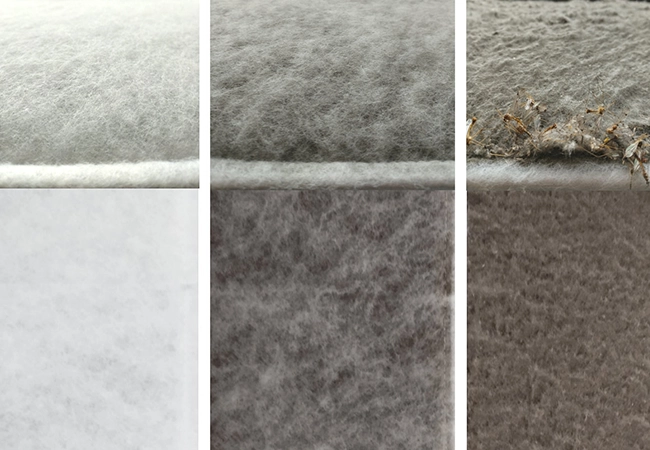
- Filter care: In summer, the air carries far more pollen, dust and agricultural pollutants. Regularly checking and replacing filters is an absolute must – not only for the efficiency of the unit itself, but above all for the health of allergy sufferers.
What else is worth remembering? (Protection from the sun)
Even the best-configured heat recovery and the most powerful air conditioning will not help if we fail to protect the house from the direct heat of the sun.
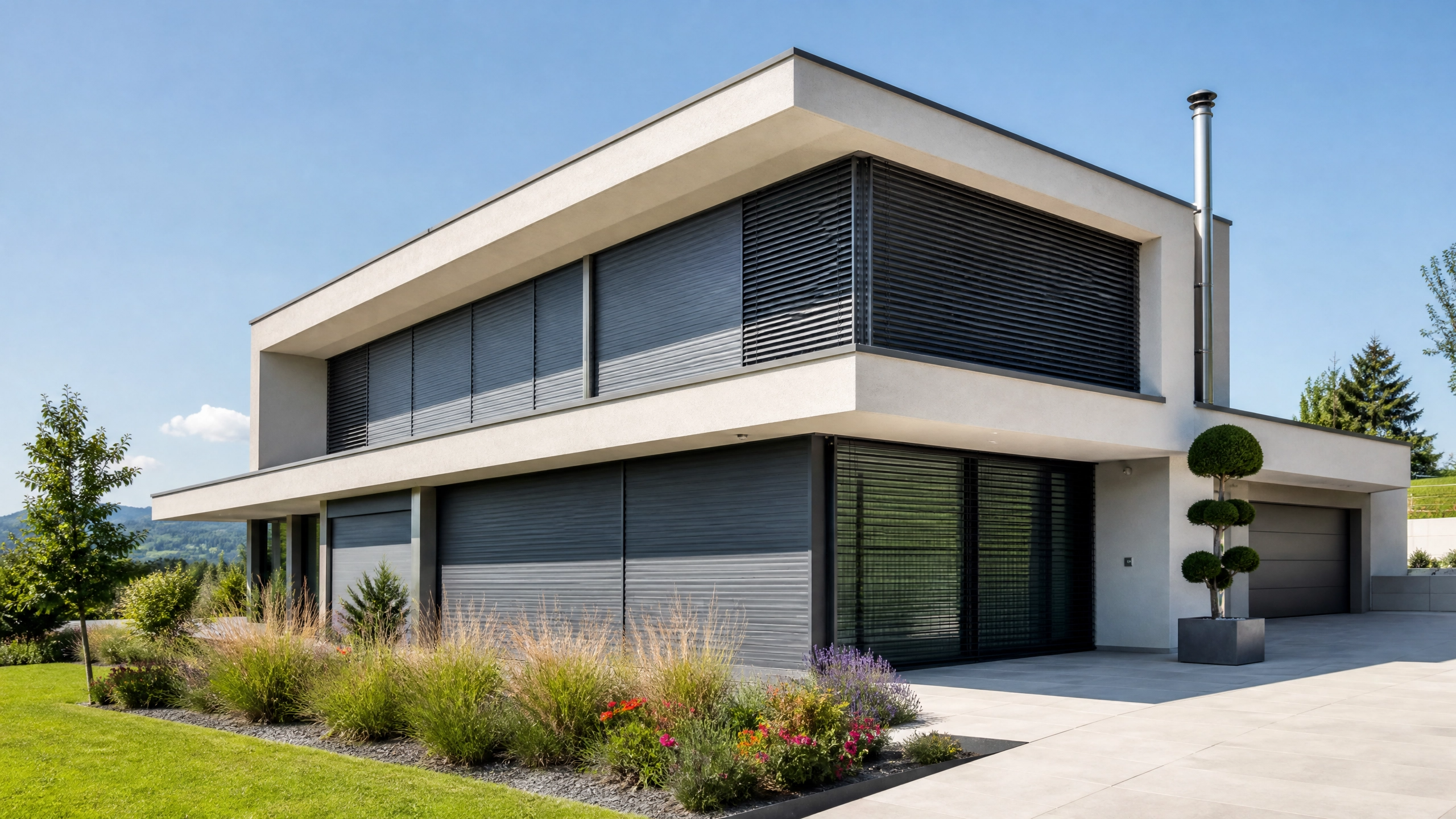
Closing the windows at the peak of the heat is essential. Because heat recovery continuously supplies you with fresh air, there is no need to open windows to ventilate – doing so would only let the heat inside. This strategy must also be combined with physically blocking the sun’s rays using external roller blinds, façade louvres or awnings.
Summary
Mechanical ventilation with heat recovery is a year-round system. In winter it looks after your wallet, and in summer it ensures you breathe fresh, filtered air without additionally heating the house. Properly configured, with skilful use of the summer bypass and supported by sun protection, it becomes a powerful ally in the battle against exhausting heatwaves.