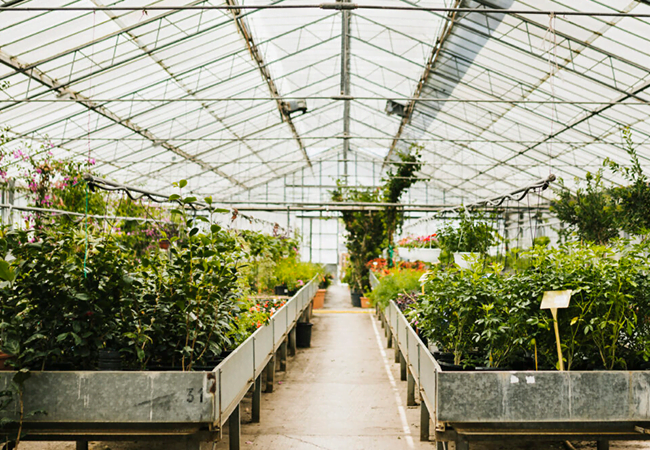
Greenhouse heating is a key element of agriculture and horticulture, enabling year-round plant production and providing protection against adverse weather conditions. One of the most effective and efficient methods of greenhouse heating is the use of LPHW unit heaters. In this article we examine why LPHW unit heaters are an increasingly popular choice among farmers and horticulturalists, analysing their advantages and benefits.
LPHW unit heaters – how do they work?
LPHW unit heaters are heating systems based on the use of water as a heat transfer medium. The process is relatively straightforward: water is heated in a dedicated heat source and then circulated through pipes or panels distributed throughout the greenhouse. Heat is transferred to the air in the space, warming it and maintaining the appropriate temperature.
What are the advantages of greenhouse heating using an LPHW unit heater?
Energy efficiency
One of the principal advantages of greenhouse heating with an LPHW unit heater is its high energy efficiency. Why? Because water has a high thermal capacity, meaning it can store a large quantity of thermal energy. This is critical as it allows a constant temperature to be maintained in the greenhouse, even when the heat source is not operating continuously. This in turn leads to a significant reduction in energy consumption and lower electricity or gas bills.
Uniform heat distribution
LPHW unit heaters ensure uniform heat distribution throughout the entire greenhouse. This means there are no cold or hot spots, which is essential for the healthy growth of plants. Optimum thermal conditions promote the healthy development of plants and increase crop yields.
FARMER HCF LPHW unit heater and the potential for using renewable energy sources
A further advantage of LPHW unit heaters is the potential for using renewable energy sources. Heating a greenhouse using solar panels, solar collectors, or heat pumps reduces the environmental impact and lowers operating costs. Find out more about the FARMER HCF unit heater.
Safety and durability
LPHW unit heaters are characterised by safety and durability. Unlike some other heating systems, they emit no flue gases and generate no combustion by-products, making them safe for health and environmentally friendly. They are also relatively resistant to failure, meaning they can be relied upon through many growing seasons.
Scalability
LPHW unit heaters are scalable, meaning they can be adapted to suit different greenhouse sizes and types. Whether you operate a small domestic greenhouse or a large industrial production facility, there is an appropriate LPHW unit heater-based solution available.
Temperature and humidity control
LPHW unit heaters allow precise control of both temperature and humidity within the greenhouse. This is critical, particularly when growing plants that require specific conditions. These units enable you to tailor the environment to the needs of your plants.
Summary
Greenhouse heating using an LPHW unit heater is a sustainable and efficient solution that brings numerous benefits to farmers and horticulturalists. Thanks to high energy efficiency, uniform heat distribution, and the potential for using renewable energy sources, LPHW unit heaters are the key to successful year-round plant production. They are also environmentally friendly and allow growing conditions to be controlled, which translates into higher quality and better crop yields. Regardless of the size of your greenhouse, LPHW unit heaters are a solution worth considering. This is why an increasing number of farmers are opting for this effective and ecological greenhouse heating solution.