
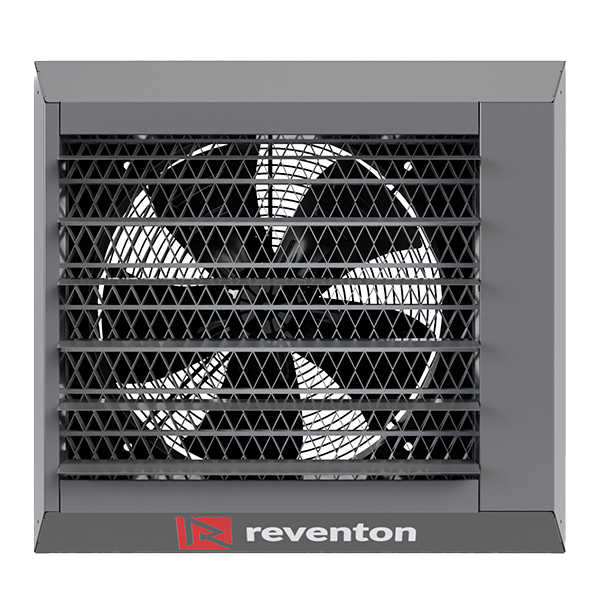
Electric unit heaters
HEATING FACILITIES WITHOUT ACCESS TO AN LPHW SYSTEMElectric unit heaters are a heating solution designed for industrial and commercial facilities without access to an LPHW or gas system. They convert electrical energy into heat, while a built-in fan evenly distributes the heated air throughout the space.
Select an electric unit heater
Our range includes the EHU-3S electric unit heater, available in a two-stage heating output configuration (7 kW or 14 kW).
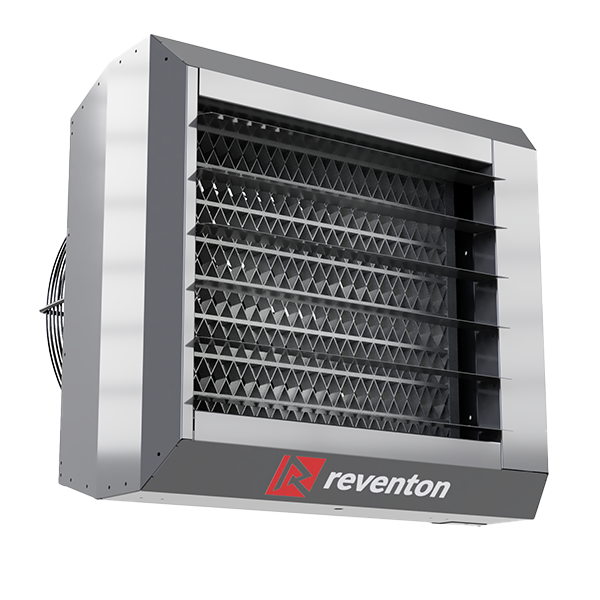
EHU-3S
A professional unit heater designed for demanding industrial facilities such as production halls, warehouses, plants and retail premises. Ideal for locations without access to a water or gas supply. Equipped with a self-regulating PTC heater and a 3-stage fan with an AC induction motor.
 7 kW or 14 kW
Ready to order?
Or maybe you just have a question? Call us or book a quick consultation!
Why choose an electric unit heater?
For facilities without a water or gas supply — all you need is an electrical connection
An electric unit heater is the right choice for buildings that have no central heating system and no access to a gas supply. A single electrical connection is all that is needed to put the unit into service. This eliminates the need for pipework, a boiler room, or a gas network connection, significantly simplifying the project and reducing installation time.
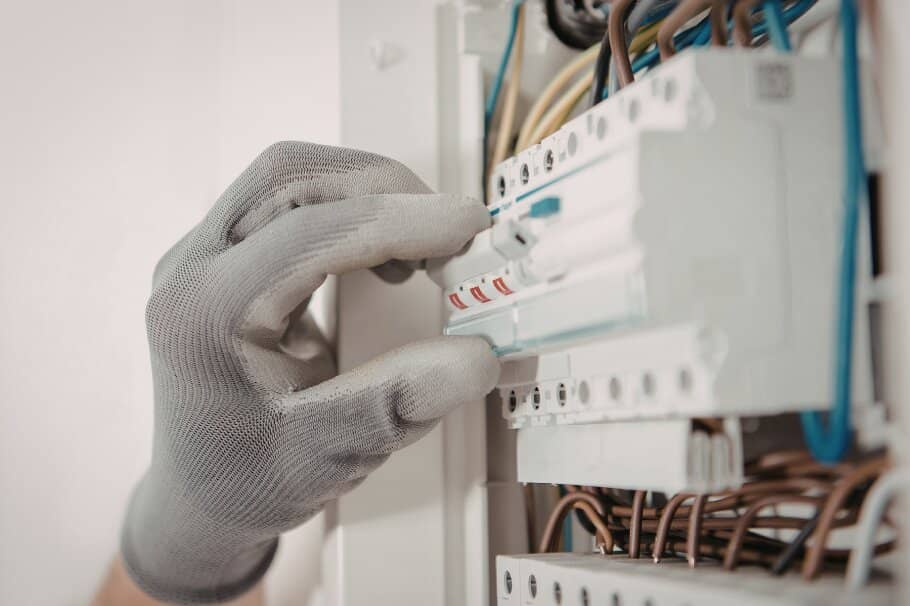
Compatible with photovoltaic systems — low running costs when using self-generated electricity
Electric unit heaters are particularly well suited to buildings equipped with a photovoltaic installation. Locally generated energy translates directly into lower heating costs, and during the transitional seasons (spring and autumn) the PV system can cover a significant portion of the unit’s energy demand.
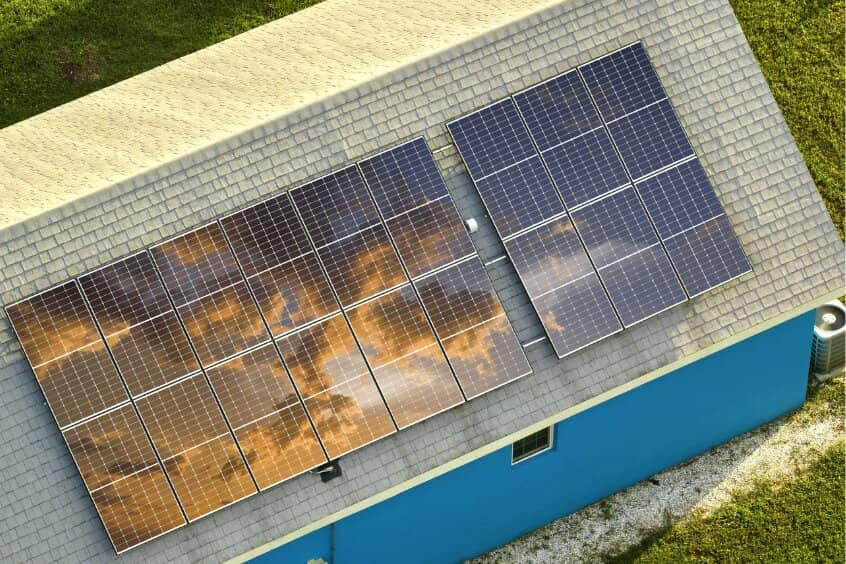
Safety through PTC technology — the self-regulating heater eliminates the risk of overheating
The EHU-3S electric unit heater is fitted with a PTC heater that automatically regulates its temperature in response to airflow. A monitoring relay measures the current drawn by the fan and prevents the heater from activating if the fan is not running. These two safeguards eliminate the risk of overheating and significantly improve the safety of the entire installation.

Why choose a unit heater with a PTC heater?
Unit heaters fitted with a PTC heater represent a modern, energy-efficient solution. The self-regulating temperature function eliminates the risk of overheating, increasing safety and extending the service life of the unit.
| Feature | PTC heater | Conventional heater |
|---|---|---|
| Safety |
Self-regulating temperature prevents overheating and eliminates fire risk |
Requires additional protective devices risk of failure without adequate supervision |
| Energy efficiency |
Automatic output adjustment optimises energy consumption |
Constant output regardless of conditions |
| Heating method | Uniformly heated surface |
Uneven heating hot and cold spots |
| Durability / service life |
Long service life resistant to physical and chemical factors |
Shorter service life greater susceptibility to external factors |
| Warm-up time | Reaches optimal temperature quickly | Longer heater surface warm-up time |
| Sensitivity to voltage fluctuations | Low sensitivity |
Higher sensitivity may affect operation |
| Cost-effectiveness |
Longer service life + lower energy consumption real long-term savings |
Shorter service life + higher energy consumption |
An additional safeguard for the PTC heater is the monitoring relay. Its function is to measure the current drawn by the fan. If the current draw is too high or too low relative to the rated value, the monitoring relay will prevent the heaters from switching on — protecting the system from activating the PTC heater when the fan is not running.
FAQ
An electric unit heater draws energy from the mains supply and converts it into heat using electric heating elements. The built-in fan forces air through the heat exchanger, allowing the heated air to distribute evenly throughout enclosed spaces and provide effective heating. These electric units are used to heat industrial and commercial premises of varying volumes.
Yes, but the correct heating output must be selected. The required output depends on the volume of the space, its insulation, and the external conditions of the building. The EHU-3S performs well in a variety of industrial and commercial spaces, and both its airflow and heating output must be matched to the specific requirements. You can calculate a preliminary heat load using our calculator, or contact our consultant for the best result.
Yes, provided that correctly specified controls are used (e.g. the HMI VOLT controller with a room thermostat function) along with the electrical protection devices required by regulations. The PTC heater features self-regulating temperature control, which eliminates the risk of overheating even during continuous operation. The room thermostat in the controller automatically switches the unit heater off and on once the set temperature is reached, adapting the heating output to the current demand.
Yes, the EHU-3S holds a CE certificate and an EU Declaration of Conformity.
All electric units fitted with heating elements, regardless of their heating output, must be protected by a residual current circuit breaker (RCCB) with a rated residual operating current of 300 mA as fire protection. The electrical circuit should also include a main isolating switch allowing safe disconnection of the unit heater from the installation. Full specifications are provided in the unit's technical documentation.
Yes, if you hold the relevant electrical qualifications. If not, installation must be carried out by a qualified electrician. Electric unit heaters do not require complex installation like a water heating system (no pipework, valves, or heating network connections), but they do require a correctly wired three-phase 400 V connection for the heater and appropriate electrical protection devices. Due to the weight of the unit (25 kg), we recommend installation by a team of at least two people.
Yes. Electric unit heaters are among the most commonly recommended solutions for buildings equipped with a photovoltaic installation. Locally generated energy covers a significant portion of the unit's heating output demand, particularly during the transitional seasons (spring, autumn) when the thermal load of the spaces is moderate.
FAQ
Blog
Knowledge base
Guides, comparisons, analyses and reviews. Practical installation tips, product news and expert articles.
See moreLibraries
BIM & CAD
Professional 3D models, Revit libraries and DWG files. Essential tools for designing modern installations.
See moreTechnical
Documentation
Complete file library: technical manuals, data sheets, hygiene certificates and declarations of conformity.
See moreProduct
Catalogue
The latest Reventon Group product catalogue. A full overview of the range broken down by category, series and model.
Download PDF