
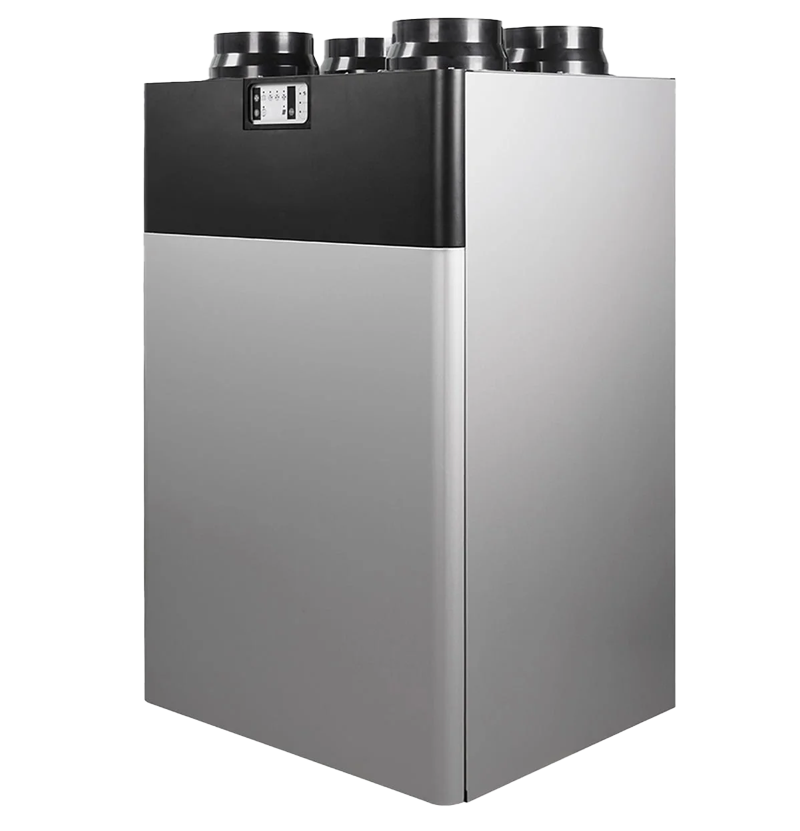
Heat and energy recovery units
HEAT AND MOISTURE RECOVERY UNITSA heat recovery unit is a modern ventilation device that ensures controlled air exchange in a building: it supplies fresh, filtered air and removes stale air, while simultaneously recovering heat (and, in selected models, moisture) from the extracted air. Our range includes three series of heat recovery units tailored to different types of facilities: INSPIRO for larger ducted systems, VERTIC for facilities with limited technical space, and WALLER for single rooms without a ducted system.
Select a heat recovery unit series
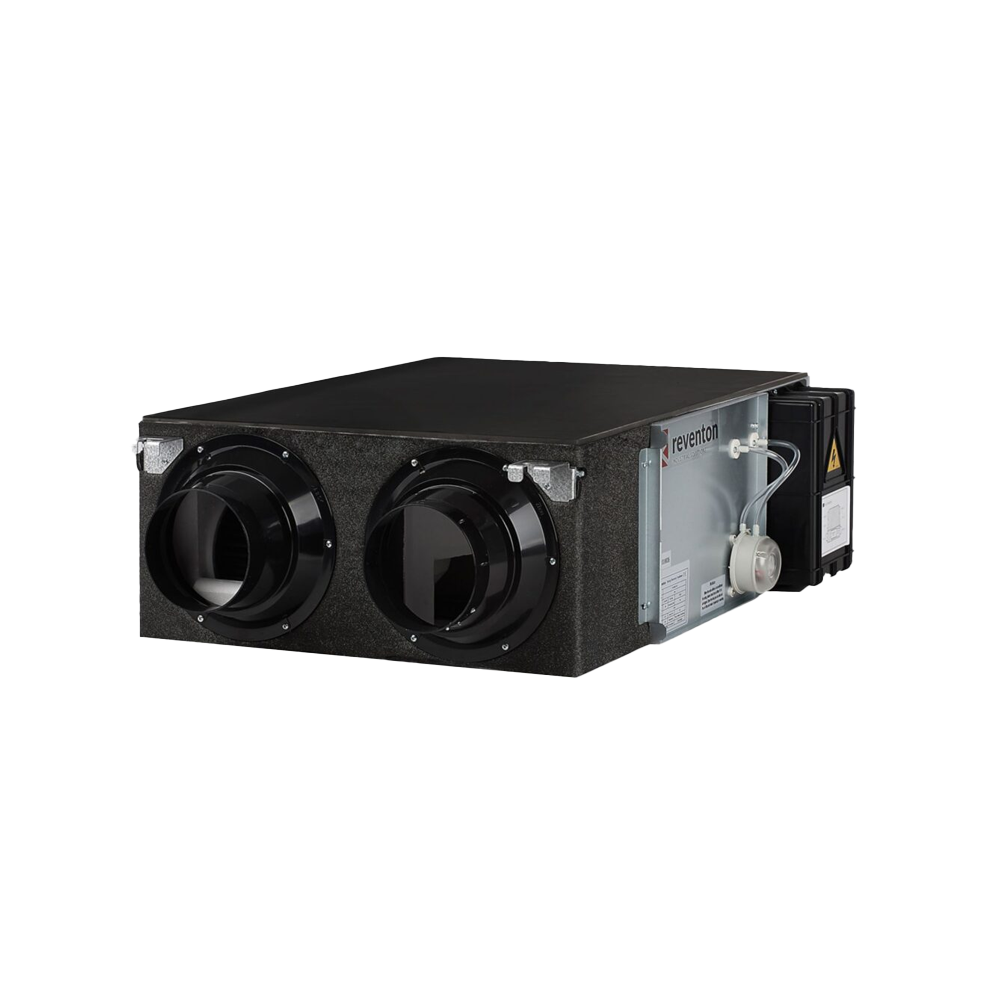
Energy recovery unit
INSPIRO series
Heat recovery units with a cross-flow heat exchanger for high-capacity ventilation in homes, halls, welfare rooms, warehouses and workshops.
- Airflow: 150–1,300 m³/h
- Heat exchanger: Cross-flow enthalpy
- Material: Cellulose or POLY
- Installation: Ceiling or floor
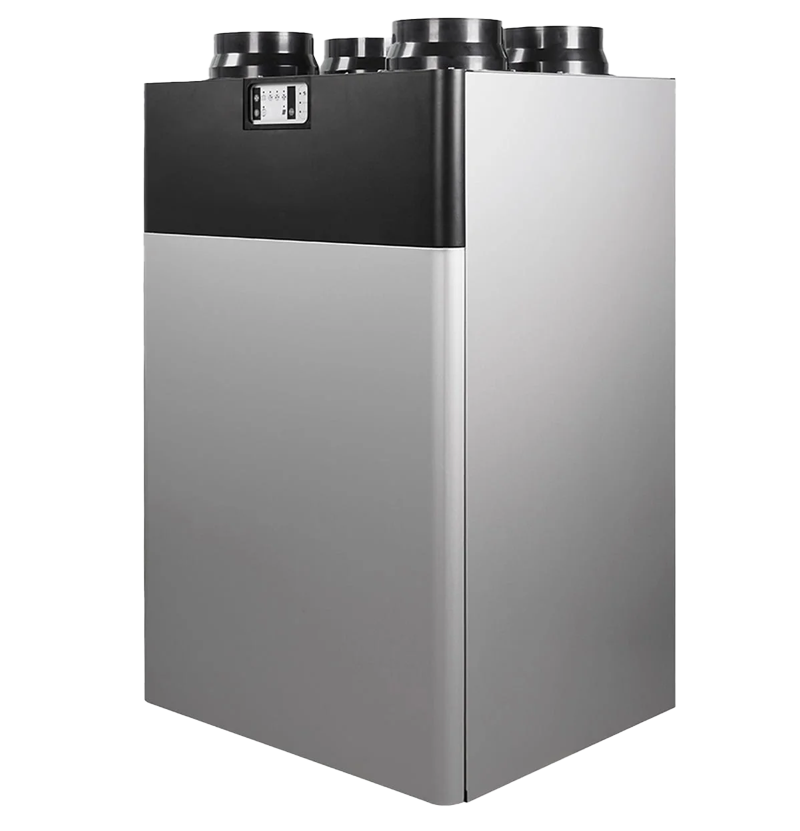
Heat/energy recovery unit
VERTIC series
Vertical ventilation units with a counter-flow heat exchanger, designed for buildings with limited plant space.
- Airflow: 80–500 m³/h
- Heat exchanger: Counter-flow
- Material: Polystyrene or POLY
- Installation: Floor, wall or built-in
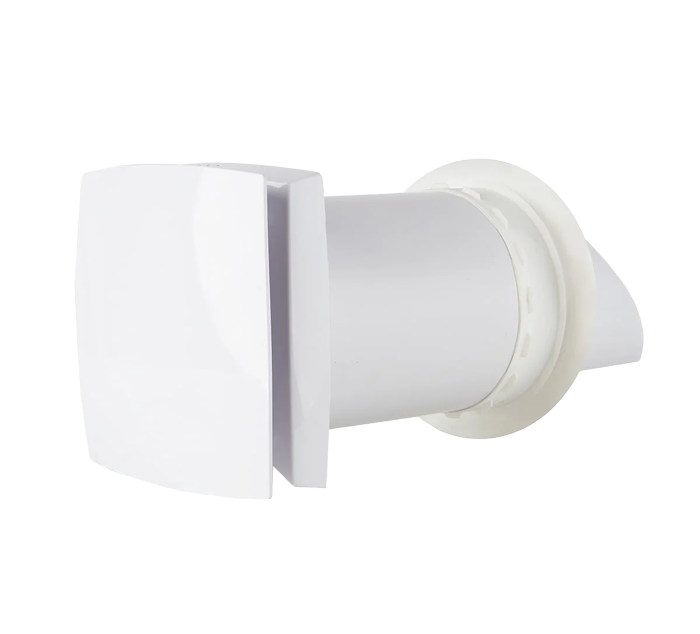
Single room energy recovery ventilator
WALLER series
Wall-mounted heat recovery ventilators with a ceramic heat exchanger — no ductwork required. Ideal for apartments, offices, hotel rooms and cafés.
- Airflow: 20–64 m³/h
- Heat exchanger: Ceramic (regenerative)
- Controls: Manual, Wi-Fi, CO₂/RH
- Installation: Wall-mounted, no ductwork required
Do you have any questions?
Do you need technical support? Or would you like to ask about commercial terms? Call us or send us a message!
Why invest in a modern mechanical ventilation system?
Heat and moisture recovery — reducing the load on the heating system in winter
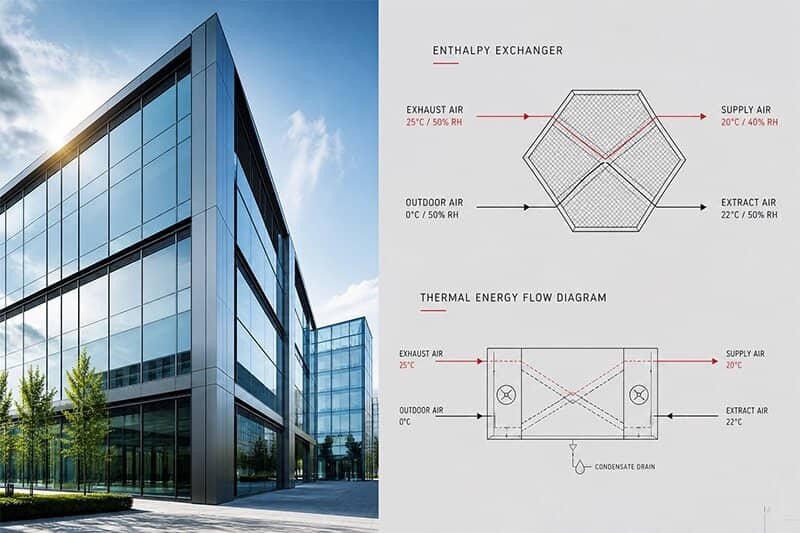
Heat recovery from extracted air reduces the load on heating systems in winter, while internal moisture recovery (in variants with enthalpy heat exchangers) prevents the air from drying out during cold weather. This directly translates into lower heating costs and improved thermal comfort in buildings sealed to current energy performance standards.
Continuous air exchange — eliminating stuffiness, mould and excessive humidity
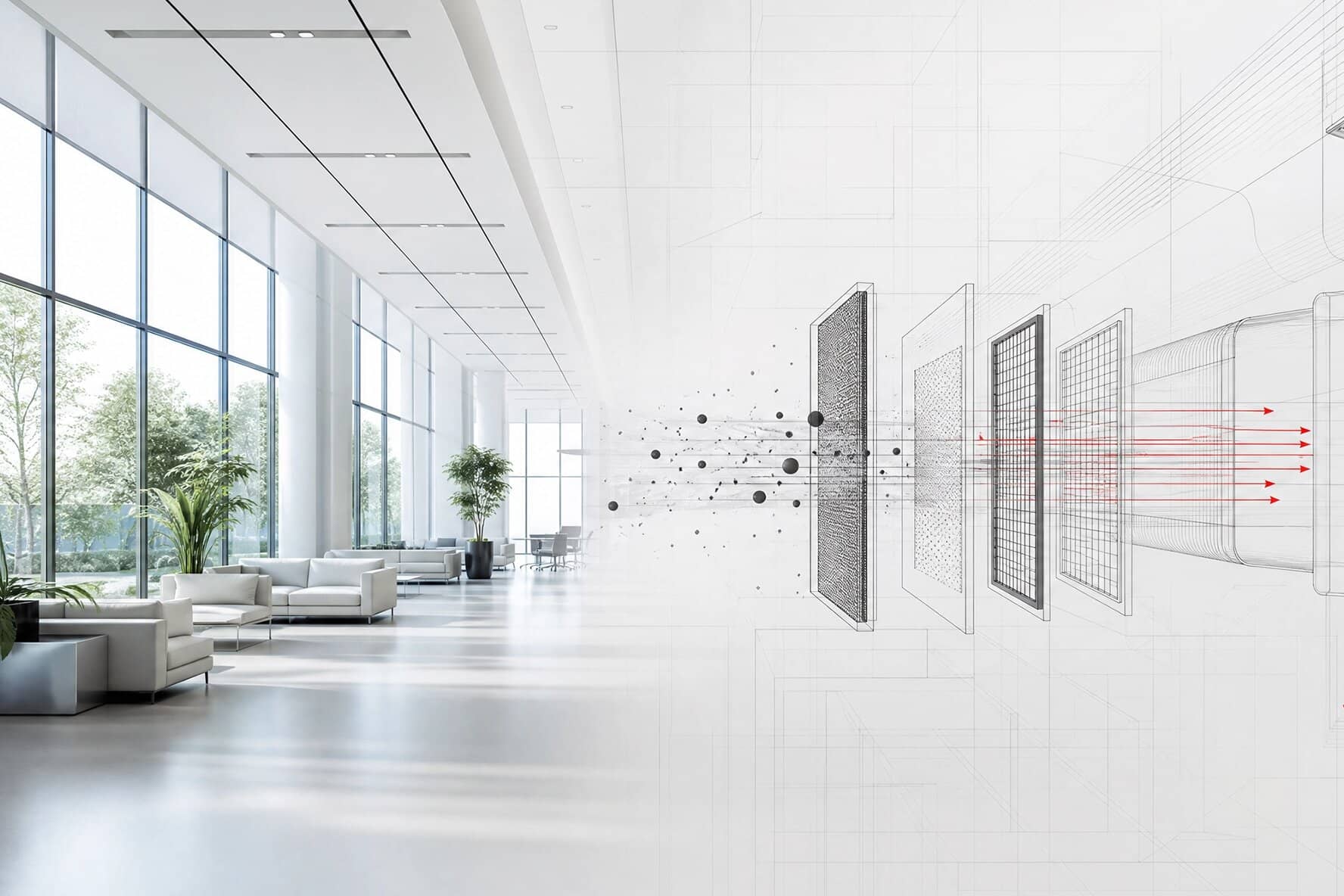
Controlled, continuous air exchange eliminates the stuffiness, mould and excessive humidity that are characteristic of spaces with gravity ventilation or airtight buildings without active ventilation. The filtration system additionally cleans the supply air of pollen, dust and larger particles.
Versatile applications — from residential buildings to commercial premises
Three heat recovery unit series make it possible to match the solution to the specific characteristics of a building. Our units are used in residential buildings and detached houses, office spaces, food shops, hotels, workshops, food service premises and warehouses. All models achieve energy class A, guaranteeing low running costs regardless of the variant chosen.

See when and which series to choose?
We meet our customers' needs
|
If you are looking for a unit for: |
Choose the series |
Why? Key advantages |
|---|---|---|
| New buildings or premises requiring higher airflow, with the option of running ventilation ductwork. | INSPIRO | Airflow 150–1,300 m³/h. Choice between the advanced version with EC fans and the cost-optimised BASIC version with AC induction motors. |
| Premises with limited plant space where a conventional unit cannot be ceiling-suspended. | VERTIC | Vertical design allowing floor, wall or built-in installation. Built-in humidity sensor and automatic bypass. |
| Individual rooms in completed or refurbished buildings where it is not possible to run ductwork. | WALLER | Ductless installation through a core hole in the external wall. Wide choice of variants — from manual control to a self-managing system with CO₂ and RH sensors. |
Heat recovery units — technical specification overview
| Feature |
INSPIRO series (incl. BASIC) |
VERTIC series | WALLER series |
|---|---|---|---|
| Airflow | 150 – 1,300 m³/h | 80 – 500 m³/h | 20 – 64 m³/h |
| Installation type |
Ducted ceiling-suspended or floor-standing per installation manual |
Ducted, vertical floor or wall installation |
Ductless in external wall |
| Heat exchanger type | Cross-flow enthalpy |
Counter-flow standard or enthalpy |
Ceramic |
| Heat exchanger material |
Cellulose or POLY polyethylene with graphene layer |
Polystyrene or enthalpy polyethylene-graphene |
Ceramic |
| Wi-Fi |
INSPIRO: optional INSPIRO BASIC: Wi-Fi module not supported |
Optional via Wi-Fi module |
Yes in Wi-Fi variants |
| Automation (sensors) |
INSPIRO: optional CO₂ and humidity sensors BASIC: simplified automation |
Built-in humidity sensor optional CO₂ sensor |
Variants with CO₂ or RH sensor control depends on model |
| Filters |
BASIC: G3 INSPIRO: G3/F9, optional F7 |
G4 optional F7 |
Pre-filter optional F7 |
| Bypass |
INSPIRO: automatic INSPIRO BASIC: manual |
Automatic | – |
FAQ
Blog
Knowledge base
Guides, comparisons, analyses and reviews. Practical installation tips, product news and expert articles.
See moreLibraries
BIM & CAD
Professional 3D models, Revit libraries and DWG files. Essential tools for designing modern installations.
See moreTechnical
Documentation
Complete file library: technical manuals, data sheets, hygiene certificates and declarations of conformity.
See moreProduct
Catalogue
The latest Reventon Group product catalogue. A full overview of the range broken down by category, series and model.
Download PDFFAQ
Heat recovery ventilation is a form of mechanical ventilation in which stale air is extracted from the rooms while fresh outdoor air is simultaneously supplied to the building. Both airstreams pass through the heat recovery unit but do not mix. Thermal energy from the extracted air is transferred to the supply air via the heat exchanger, improving the thermal comfort of the space.
In practice, heat recovery ventilation is responsible not only for energy recovery but also for continuous air exchange within the building. Filters help maintain clean indoor air by removing larger particles, dust and suspended matter.
The cost of a heat recovery ventilation system depends primarily on the type of building, the required unit airflow, the length and layout of the ductwork, the type of heat recovery unit, and the scope of the control automation.
The budget required for a complete heat recovery system in a detached house will differ from that for a single wall-mounted unit intended for a specific room.
When calculating costs, it is important to account not only for the purchase of the unit itself, but also the system design or selection, ductwork, supply and extract air terminals, duct insulation, installation, airflow balancing and ongoing maintenance.
The POLY enthalpy heat exchanger is made from a polyethylene material with a graphene layer — making it more durable than its cellulose counterpart. The cellulose heat exchanger can easily be recycled. Both heat exchangers offer the same efficiency.
The type of heat exchanger in the ventilation unit does not affect electricity consumption. However, a clear energy saving can be observed in winter — heating costs can be reduced thanks to efficient heat recovery. In summer, heat recovery ventilation works differently: the unit's automation activates the bypass so that the supply air bypasses the heat exchanger, preventing the rooms from overheating. This ensures constant thermal comfort.
The electric circular duct heater, also known as a pre-heater, has a temperature sensor that can be set freely. The sensor will automatically switch the duct heater on and off once the set temperature threshold is crossed. It is recommended that the duct heater activates below −9°C of measured outdoor temperature to prevent the enthalpy heat exchanger from freezing.
An optional Wi-Fi module can only be installed in VERTIC, INSPIRO and INSPIRO POLY models. The INSPIRO BASIC series does not support a Wi-Fi module, so this requirement should be taken into account at the unit selection stage. In the WALLER series, Wi-Fi functionality is available in dedicated unit variants such as the WALLER Wi-Fi and WALLER Wi-Fi CO₂/RH.
A heat recovery unit should be serviced at least once a year, while filters and the heat exchanger should be inspected more frequently — in accordance with the technical documentation for the specific model and any filter alarm notifications. In practice, maintenance frequency depends on operating conditions, the level of airborne dust and the type of filter installed.
Yes, regular filter replacement is necessary because filters protect the heat exchanger and fans from fouling while also affecting the quality of the air supplied to the rooms. A clogged filter increases airflow resistance, which can reduce ventilation performance, increase fan energy consumption and impair the comfort of using the system.
The frequency of filter replacement depends on the filter class, the intensity of use of the heat recovery unit, the location of the building and the level of contaminants in the outdoor air. In practice, filters should be inspected on a regular cycle and replaced in accordance with the recommendations in the unit's technical documentation or whenever a filter alarm is triggered.
Yes, our sales and technical team are always available to you for any additional questions about your order or the product itself. We also run product training sessions for B2B partners.
Blog
Heat recovery ventilation in summer – facts, myths and practical tips
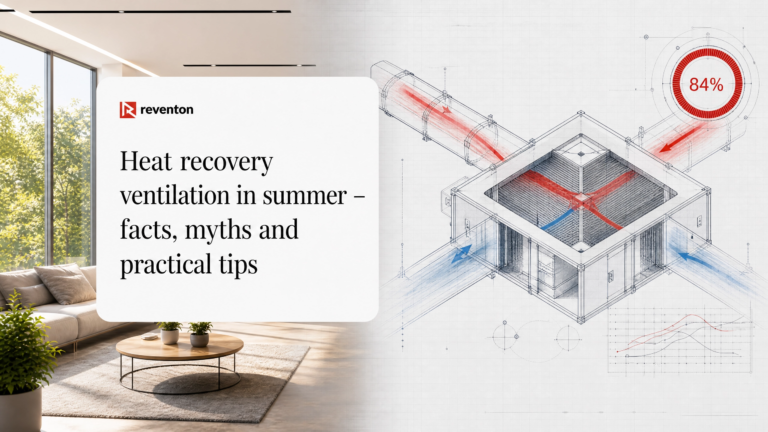
Does mechanical ventilation with heat recovery come in useful during summer heatwaves? Many people still believe that heat recovery is a system...
Read more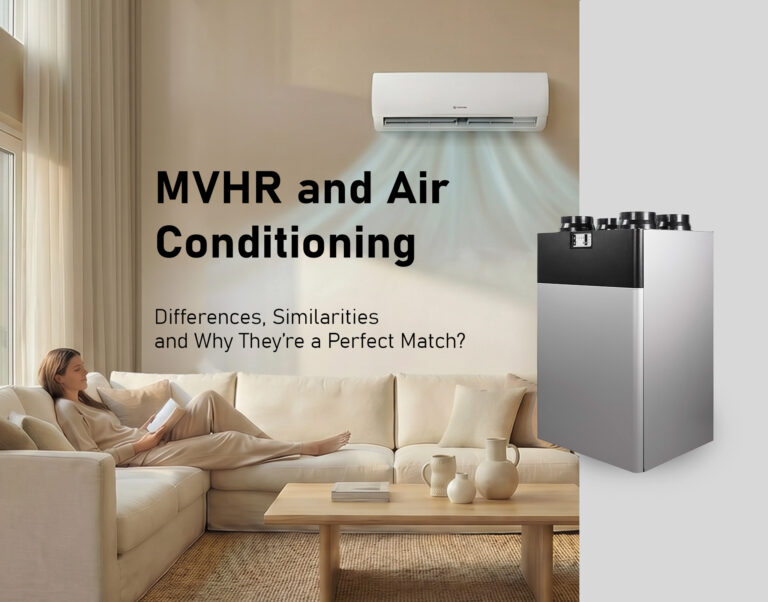
Heat recovery vs air conditioning – differences, similarities and why they make the perfect pairing
In modern, energy-efficient construction, the concepts of heat recovery ventilation and air conditioning frequently appear side by side, which often leads to...
Read more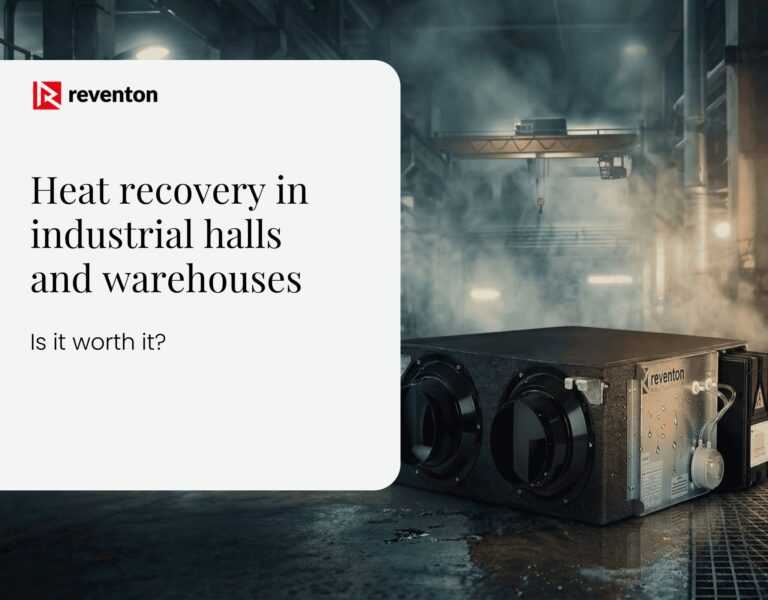
Heat recovery ventilation in industrial halls and warehouses – is it worth it?
Warm air escaping through gravity ventilation is the most direct route to a drastic increase in building operating costs. In large-volume buildings,...
Read moreBook a quick
consultation
Don't waste time analysing catalogues on your own. Leave your details — we'll call back to ask about your building's parameters and prepare a specific solution. What do you gain from a single conversation?
-
Calculation of the heating/cooling load for your building volume
-
Immediate confirmation of unit availability and realistic delivery times
-
Unit selection that reduces electricity and heating bills — not just low purchase cost
-
Direct access to an expert who can assist with installation and design queries