
Destratification fans
RECOVERING HEAT FROM UNDER THE CEILING AND REDUCING HEATING COSTSDestratification fans are ceiling fans designed to recirculate the warm air accumulating under the ceiling in facilities over 4 m high. They bring the accumulated heat back down to the occupied zone, equalising the temperature throughout the facility. Our range includes two destratification fan models: the HC-EC with an energy-saving EC motor and the TORNADO with a steel construction, along with a full set of controllers, speed controllers and mounting accessories.
Choose a destratification fan
Destratification fan
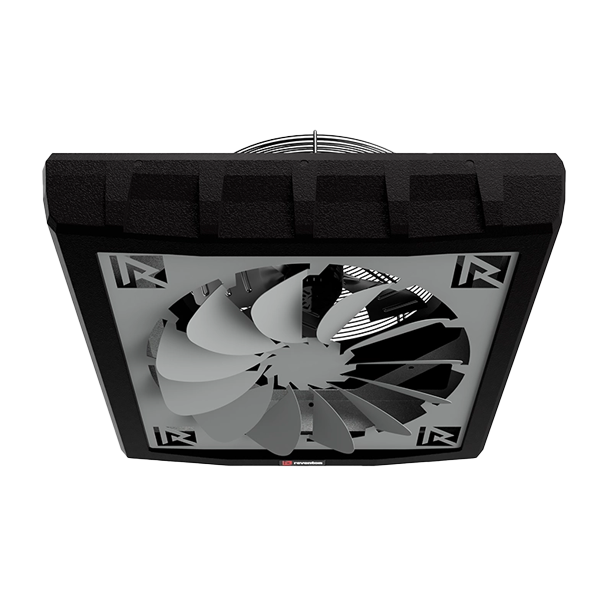
HC-EC
Lightweight design in an EPP casing with an energy-efficient EC motor and smooth 0–100% speed regulation. Dedicated to production halls, warehouses, and logistics centers.
- Airflow: up to 5,800 m³/h
- Range: up to 11 m
- Motor power: 430 W
- Regulation: Smooth (0–100%)
Destratification fan
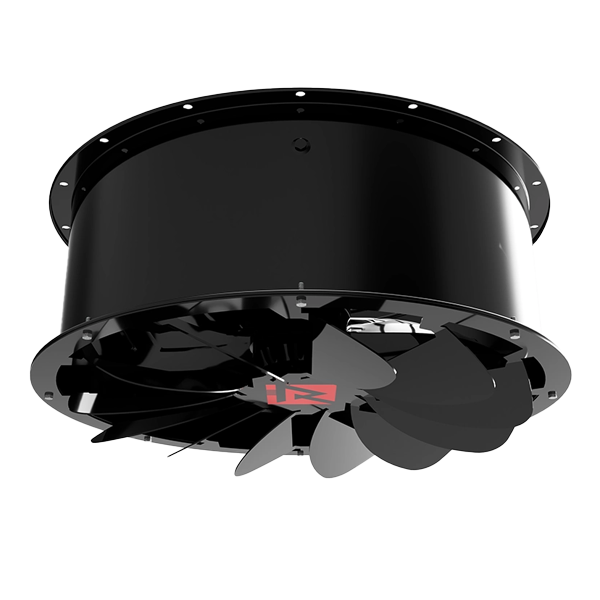
TORNADO
Cylindrical steel construction with a 1-speed AC motor. Dedicated to larger facilities with airflow capacities up to 10,200 m³/h and a vertical range of up to 15 m.
- Airflow: 2,200 – 10,200 m³/h
- Range: up to 15 m
- Motor power: 126 – 660 W
- Regulation: 1 speed or speed controller
Do you have any questions?
Need technical support? Or would you like to ask about commercial terms? Call us or write to us!
Why choose our destratification fans?
Up to 30–60% reduction in heating energy consumption
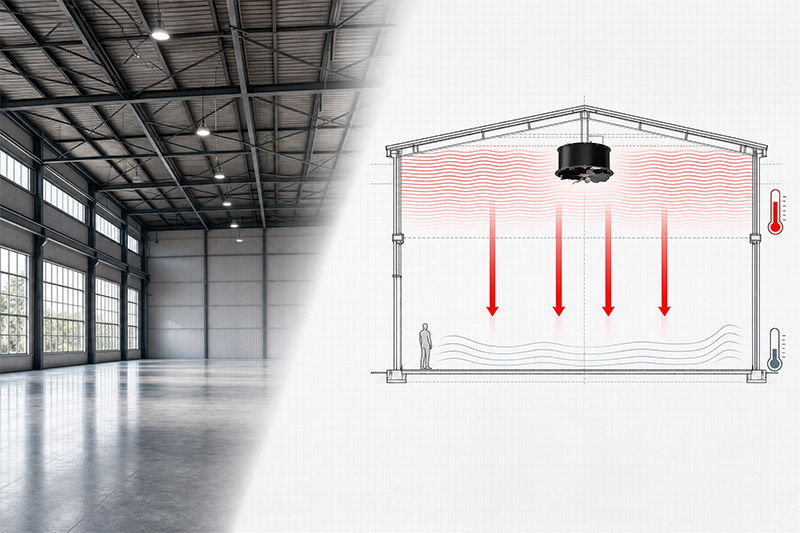
In high-ceiling facilities, warm air accumulates near the ceiling while the occupied zone remains cooler. British analyses and research, conducted by entities including the University of Nottingham, have shown that destratification can reduce heating energy consumption by up to 30%, and in certain facilities by up to 60%. The result is a stable temperature throughout the building, decreased heat loss through the roof, and lower heating bills.
Integration with LPHW unit heaters
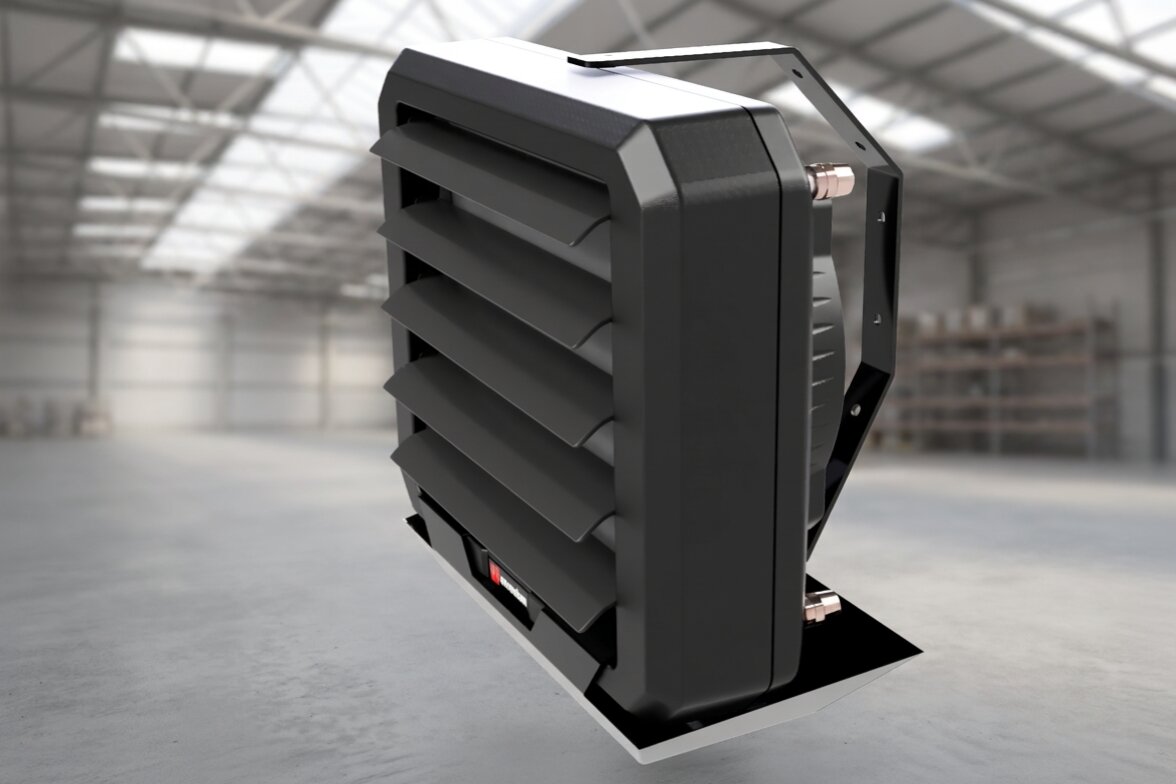
Destratification fans achieve the best results when paired with air heaters. The heater generates heat, while the destratification fan forces it back down into the working zone before it escapes through the roof. This configuration is particularly effective in production halls, warehouses, and logistics facilities heated by HC, FARMER, or S series heaters.
Two models for different operating conditions
The choice of model allows you to match the device to the specifics of the facility. The HC-EC with an EPP casing works perfectly in typical production halls and warehouses — its energy-efficient EC motor with smooth speed regulation lowers operating costs and enables integration with programmable controllers. The TORNADO, with its steel construction, is designed for sites where casing durability and higher airflow capacity are top priorities — delivering up to 10,200 m³/h with a vertical range of 15 m.
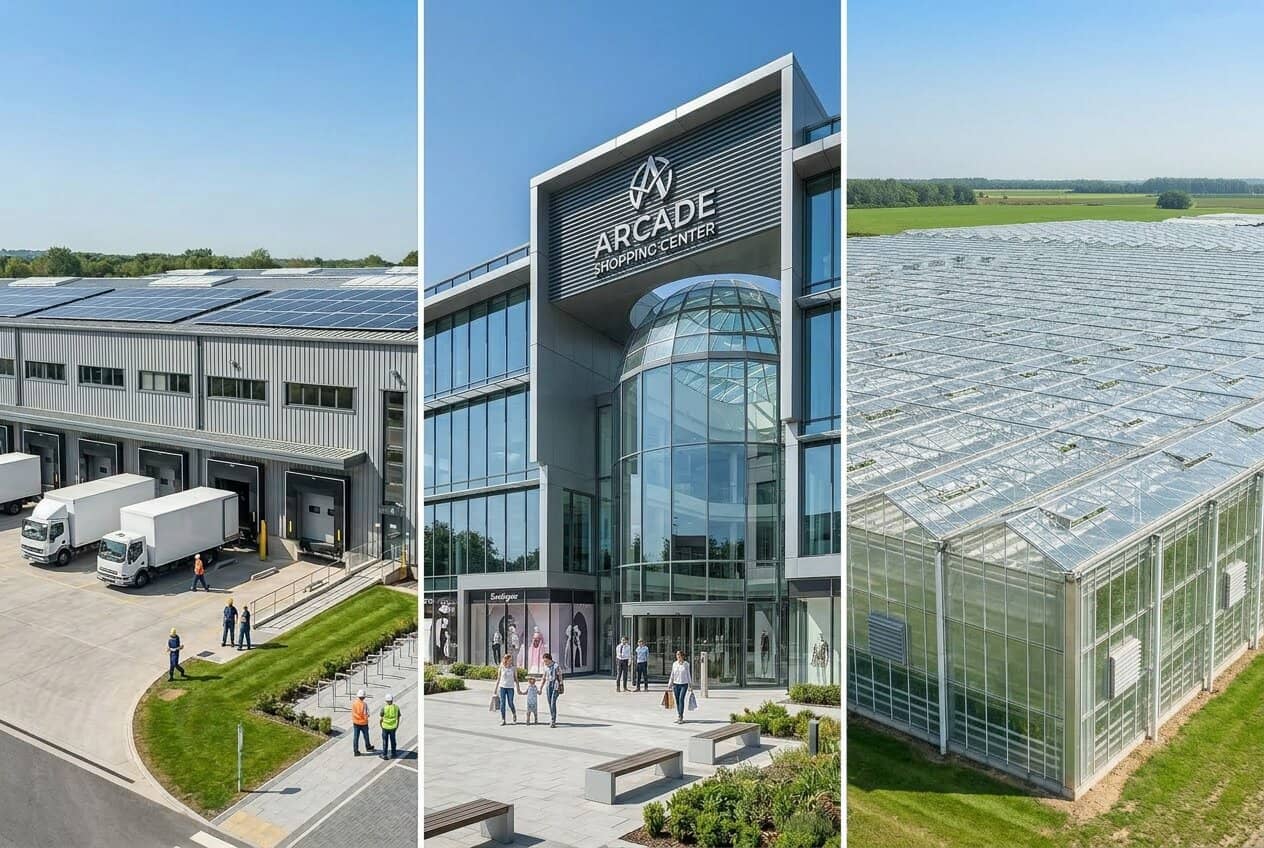
See when and which model to choose
We respond to the needs of our customers
|
If you are looking for a unit for: |
Choose a model |
Why? Key advantages |
|---|---|---|
| Production halls, warehouses or logistics centres with a focus on smooth speed control and lower electricity consumption. | HC-EC | Energy-efficient EC motor with smooth 0–100% control. Lightweight EPP casing, possibility of integration with HMI BMS programmable controllers. |
| Large buildings with high ceilings (up to 15 m) or requiring a durable steel casing. | TORNADO | Powder-coated steel construction. Airflow up to 10,200 m³/h, simple stud mounting. |
FAQ
Blog
Knowledge base
Guides, comparisons, analyses, and opinions. Practical installation tips, product novelties, and expert articles.
See moreBIM and CAD
libraries
Professional 3D models, Revit libraries, and DWG files. Essential tools for designing modern installations.
See moreTechnical
documentation
Complete database of files: manuals, data sheets, hygienic certificates, and declarations of conformity.
See moreProduct
catalogue
The latest product catalogue from Reventon Group. An overview of the range broken down into all categories, series, and models.
Download PDFFAQ
Destratification fans are effective in facilities with a height of over 4 m, and their full potential is revealed at ceiling heights of 6–15 m, where the phenomenon of warm air accumulation under the ceiling is most visible. The higher the facility, the greater the potential savings from destratification.
British research, including studies conducted at the University of Nottingham, has shown that destratification can reduce heating energy consumption by up to 30%, and in some facilities by up to 60%. Real savings depend on the facility's height, insulation quality, and the heating source capacity.
No, a destratification fan does not generate heat; it redistributes it within the facility. It achieves the best results when combined with air heaters (e.g., HC, FARMER, or S series), where it is responsible for bringing warm air from under the ceiling back down to the working zone.
HC-EC works well in typical production halls and warehouses where low operating costs and precise, smooth speed regulation are priorities. TORNADO is for larger volume facilities (airflow up to 10,200 m³/h, range up to 15 m) and locations where mechanical casing strength is key — the powder-coated steel construction withstands dust, moisture, and impacts typical of warehouse back-office environments better.
All models are designed for ceiling mounting. HC-EC units are installed using a swivel console or a Z-type hanger with a shock absorber. TORNADO units feature integrated mounting holes allowing for direct suspension on threaded rods. The Z-type hanger with a shock absorber is compatible with both models.
Yes, destratification fans can be used as ventilation devices to support air circulation even outside the heating season. In high-ceiling rooms, mixing air improves thermal comfort due to the light draft effect, although the device does not lower the air temperature itself. In this mode, the HC-EC model is particularly beneficial due to its smooth speed regulation, which allows for reducing RPMs to a level ensuring quiet operation while maintaining effective circulation.
Controller selection should be made based on the facility size and the method of integrating the destratification fan with the heating system. For typical installations, an HC manual thermostat, which switches the device on after exceeding a set temperature under the ceiling, is sufficient. In larger facilities where several units operate in parallel, programmable controllers from the HMI BMS series work better — allowing for centralized management of the entire system's operation and integration with a Building Management System (BMS).
Destratification fans do not require intensive maintenance — AC induction motors and EC motors are maintenance-free in typical operating conditions. Periodic cleaning (twice a year) of the rotor blades and casing to remove dust deposits is recommended to maintain nominal airflow performance. Accessing a unit mounted at a great height requires appropriate equipment, so maintenance work should be planned in conjunction with other facility service activities.
Blog
Heat recovery ventilation in summer – facts, myths and practical tips
Does mechanical ventilation with heat recovery come in useful during summer heatwaves? Many people still believe that heat recovery is a system...
Read more
Heat recovery vs air conditioning – differences, similarities and why they make the perfect pairing
In modern, energy-efficient construction, the concepts of heat recovery ventilation and air conditioning frequently appear side by side, which often leads to...
Read more
Heat recovery ventilation in industrial halls and warehouses – is it worth it?
Warm air escaping through gravity ventilation is the most direct route to a drastic increase in building operating costs. In large-volume buildings,...
Read moreRequest a quick
consultation
Don't waste time analyzing catalogs on your own. Leave your contact details — we will call you back to ask about your facility's parameters and prepare a specific solution. What do you gain during a single call?
-
Calculation of heating/cooling capacity requirements for your building volume
-
Immediate confirmation of product availability and realistic delivery times
-
Selection of devices that reduce electricity and heating bills, rather than just having a low purchase price
-
Direct contact with an expert who will assist with installation and design questions