Warm air escaping through gravity ventilation is the most direct route to a drastic increase in building operating costs. In large-volume buildings, where thermal energy accumulates beneath the ceiling, the absence of energy recovery is a waste that modern business can no longer afford. Heat recovery ventilation in an industrial hall transforms the energy balance, converting exhausted air into a free heat source for the incoming supply stream.
In this article we analyse the scenarios in which the use of heat recovery units and ventilation systems with heat recovery, such as the INSPIRO series, becomes an investment that pays for itself, and when it is a necessity arising from technical standards and the characteristics of the building.
Key conclusions:
- Heat recovery ventilation in industrial facilities can reduce heating capacity demand by as much as 50–70%, which translates directly into lower gas or electricity bills.
- New halls must, in accordance with the Technical Conditions (WT 2021), meet specific primary energy demand indicators, which in practice is difficult to achieve without heat recovery.
- In clean production zones, workshops, and warehouses with stringent humidity requirements (e.g. pharmaceuticals), heat recovery ventilation with an enthalpy heat exchanger is the only means of stabilising air parameters.
- In tall buildings, the use of destratification fans (e.g. HC-3S or HC-EC) is recommended in order to manage effectively the heat accumulated beneath the ceiling.
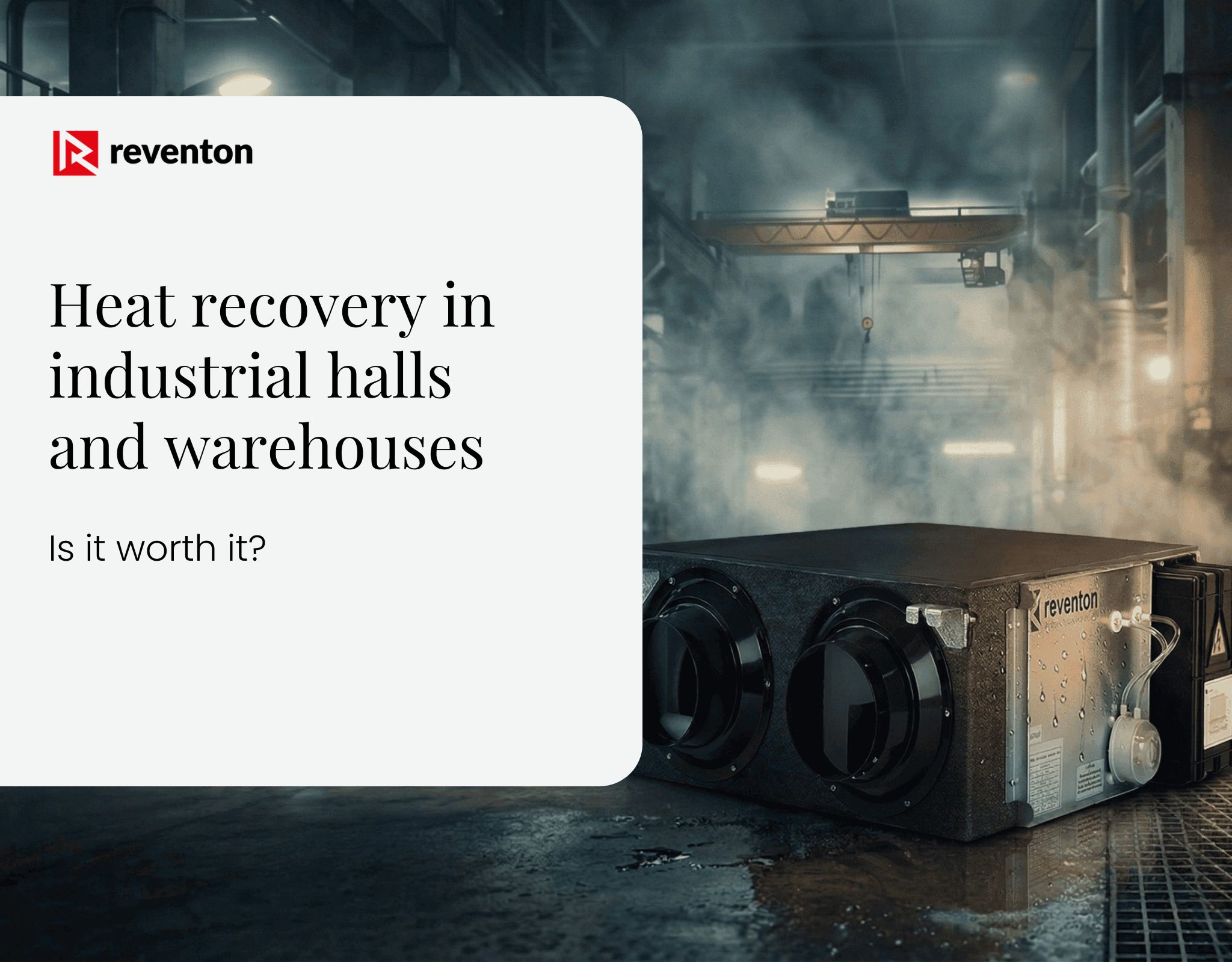
- INSPIRO heat recovery units are an excellent complement to welfare facilities and office spaces within warehouse halls, ensuring an appropriate standard of air exchange.
Is industrial heat recovery ventilation in a hall worthwhile?

Absolutely. Although many investors treat industrial heat recovery as an unnecessary expense, the costs of heating air in production halls account for 50% to 80% of total heating costs. Mechanical ventilation without heat recovery expels warm air at 20°C to the outside, whilst outdoor temperatures in winter can fall to as low as -20°C. This 40-degree difference must be compensated by the heating system, generating enormous energy consumption.
Industrial heat recovery employs heat exchangers (e.g. plate or cross-flow heat exchangers) that transfer energy from the exhaust air to the supply air. Importantly, the two airstreams remain completely separate, ensuring that fresh air enters the building not only pre-heated but also clean.
This solution delivers measurable financial savings. In production halls operating on a multi-shift basis, the investment in heat recovery ventilation frequently pays for itself within 2–3 seasons. This demonstrates that economic considerations are just as important here as air quality.
Conclusion: The larger the volume of the hall and the higher the air change rate requirements, the shorter the return on investment period. In facilities operating on a shift system, this return is frequently achieved within 2–3 heating seasons.
Comparison table: Gravity ventilation vs. mechanical ventilation with heat and moisture recovery
| Feature / Parameter | Gravity ventilation | Mechanical ventilation with heat recovery (INSPIRO) |
| Airflow control | None. Dependent on wind and outdoor temperature. Risk of overcooling or inadequate ventilation. | Full. Constant, specified airflow rate (m³/h) regardless of weather conditions. |
| Air heating costs | High. Heating 100% of air from outdoor temperature. | Low. Heating demand reduced by 50–80% through heat recovery. |
| Air humidity | Uncontrolled. Very low in winter (dry air). | Stable. Moisture recovery possible (enthalpy heat exchanger). |
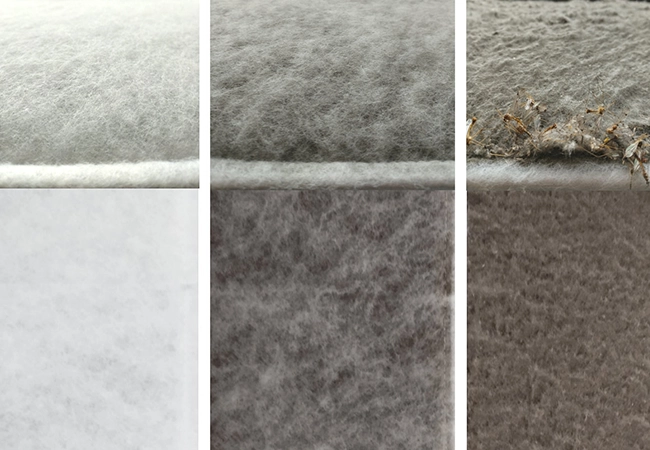
| Air filtration | None. Dust and insects enter the hall. | High. Option to use F9 filters (protection of product and personnel). |
| Legal requirements (WT 2021) | Difficult or impossible to fulfil for new heated halls. | Facilitates compliance with PE (Primary Energy) requirements. |
Where is industrial heat recovery ventilation a necessity?
Production halls with pollutant emissions
In production halls where processes generate chemical vapours, dust, or moisture, air exchange must be intensive. Gravity or mechanical ventilation at the level of several volume air changes per hour without industrial heat recovery would be economic suicide. Delivering clean air and effective removal of contaminants whilst preserving thermal energy is a task for the INSPIRO ventilation unit.
Food and pharmaceutical industries
In the food and pharmaceutical industries, air humidity and appropriate temperature are critical. Heat recovery ventilation with an enthalpy heat exchanger enables the recovery of not only heat but also moisture, which is particularly important for maintaining the parameters of technological processes. Advanced control systems allow precise regulation of these parameters across different zones of the production hall, meaning that ventilation with heat recovery protects the product against desiccation or excess moisture.
The efficiency of the heat recovery system in such environments eliminates or significantly reduces the need for additional industrial humidifiers.
Welfare facilities and office spaces within halls
Heat recovery ventilation means not only lower operating costs compared with traditional ventilation systems. It is also a matter of employee comfort.
In large-volume production halls where a significant number of employees work, effective ventilation reduces fatigue and protects the health of employees. A constant supply of fresh air enables improved working conditions, which also translates directly into employee productivity.
Furthermore, welfare facilities, offices, changing rooms, and other partitioned spaces must comply with ventilation standards for occupants (30–50 m³/h per person). Our INSPIRO and VERTIC heat recovery units are ideally suited to this application. Their design allows installation in locations that do not interfere with daily operations.
Legal aspects: WT 2021 and the role of waste heat recovery
Since 2021, updated Technical Conditions have been in force in Poland, which have drastically reduced the permissible value of the primary energy indicator. This means that a building must not only be well insulated, but also supplied with energy carrying a low non-renewable primary energy factor.
In practice, designing a new hall heated by gas or coal without the use of ventilation with heat recovery is extremely difficult, and obtaining a building permit is often impossible. Industrial heat recovery ventilation is therefore not so much an option as a formal requirement for the approval of a building for use.
Destratification fans as “hidden heat recovery” in tall industrial buildings
In industrial halls with a height in excess of 4–5 metres, warm air naturally rises towards the roof. The working zone may be at 18°C whilst the temperature beneath the ceiling reaches 30°C. This thermal energy is wasted. The use of destratification fans (e.g. the HC series) allows this heat to be pushed back down.
This can be described as “internal heat recovery” or zone ventilation. This action supports the efficiency of the heating system and ensures that the hall ventilation becomes complete. Combined with industrial heat recovery ventilation, destratification ensures optimisation of working conditions from floor to ceiling.
Industrial heat recovery ventilation applications – frequently asked questions
Can a heat recovery unit in a production hall handle dust-laden air?
Yes, provided the appropriate pre-filtration is selected. INSPIRO heat recovery units are designed for operation in technical environments. In cases of very heavy dust loading (e.g. joinery workshops), additional filtration modules are installed upstream of the heat recovery unit to protect the heat exchanger from blockage. Regular servicing and replacement of filter media are essential, particularly in the case of demanding production processes.
Does installing heat recovery ventilation require roof modifications?
Not always. INSPIRO series units and suspended models can be installed inside the hall, beneath the ceiling, with only the intake and exhaust ducts passing through the side walls. This is often less expensive and safer than making alterations to the roof cladding, particularly in existing buildings undergoing thermal refurbishment.
How do I select a destratification fan to complement heat recovery ventilation?
Selection depends on the height and floor area of the hall and the specific characteristics of the facility (the technological processes carried out). Devices such as HC destratification fans have a defined throw distance (air projection). The objective is to cover the entire floor area of the hall with a “canopy” of warm air directed downwards from above. Reventon Group engineers determine the number and placement of units based on the hall floor plan, in order to avoid dead zones and draughts in occupied areas.
Summary
The decision to install heat recovery ventilation in an industrial hall is today standard practice, driven by ROI analysis. In the face of rising energy prices, recovering heat from exhaust air is the only means of ensuring the energy efficiency of a facility. The use of the INSPIRO ventilation unit and zone ventilation based on destratification fans improves working conditions and generates measurable economic benefits.
Bear in mind that every hall ventilation system should be designed with regard to the specific characteristics of the given facility, the type of production, and the size of the building. Only then will the system operate at maximum efficiency.
Do you need professional equipment selection for your hall?
Contact the Reventon experts! We will prepare an analysis for you that takes into account your company’s technological processes and select advanced systems that ensure comfortable working conditions and the lowest possible operating costs. Browse the INSPIRO range or contact a technical adviser.