If you are looking for ways to effectively heat a warehouse facility, this article is exactly what you need!
Large-volume spaces present a real challenge when designing a heating system that is both effective and prevents energy losses—and, consequently, financial losses. We will try to explain how to prepare for this type of investment.
What causes heating problems in warehouse spaces?
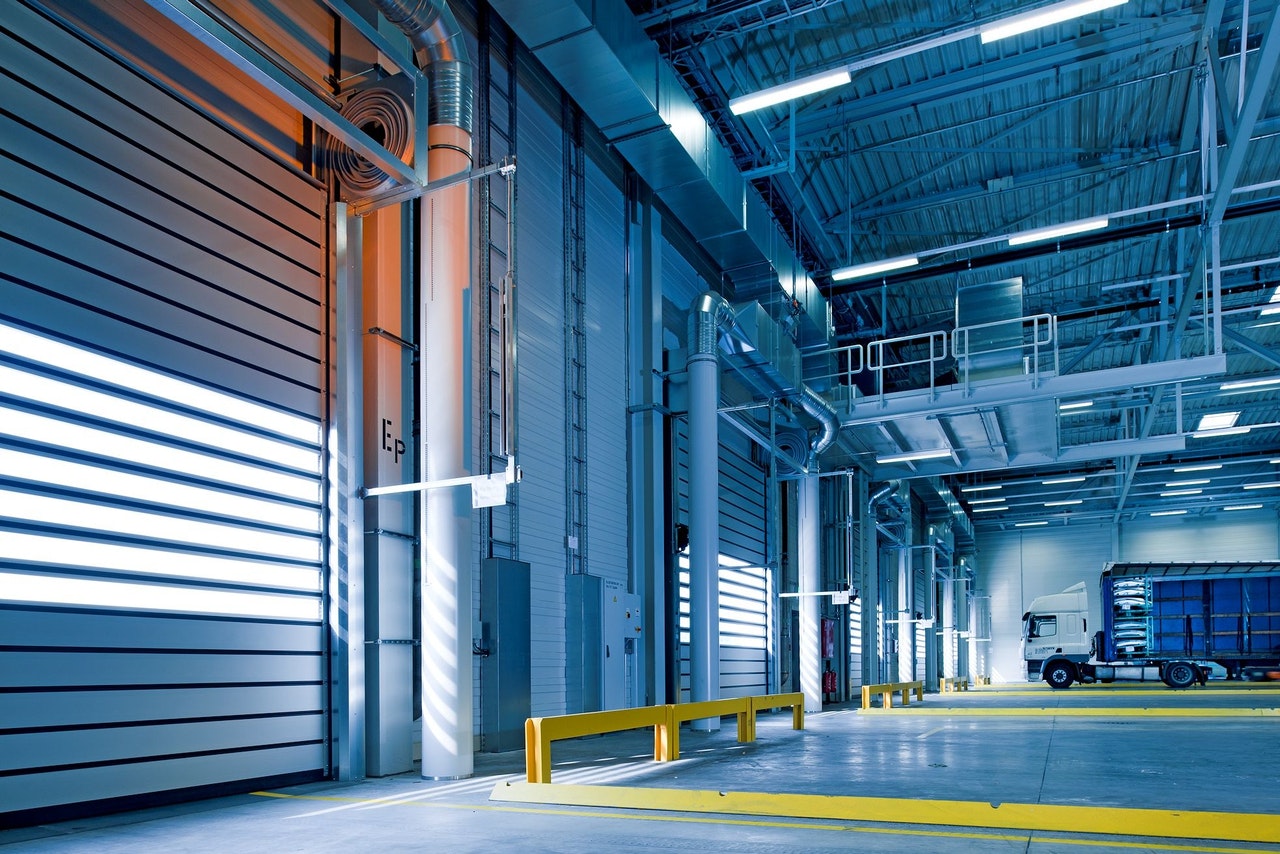
Heating warehouse halls and other large-volume buildings (with volumes that often exceed 1,000 m3 and heights up to a dozen or more meters) is quite a challenge.
Facilities of this type are characterized by a high heating load due to their size. Furthermore, in many cases, loading docks and access doors are opened periodically, causing additional heat loss. Effectively heating high-ceiling spaces is also hindered by the vertical temperature gradient phenomenon; as a result, the less dense, heated air rises and accumulates in the under-ceiling zone, thereby compounding heat losses through the roof.
How to ensure effective warehouse heating?
The first thing to realize is that, in most cases, the purpose of a heating system is to ensure a comfortable temperature in the occupied zone, which is typically up to about 2 meters above floor level. The equipment designed for heating large-volume spaces includes water heaters, which feature an adjustable airflow to direct heated air precisely to the required areas of the facility. Since the throw of the supplied air is a key parameter, high-throw units from our product range—such as the HC 50-3S, HC 80-3S, or the steel-cased S4-3S—are particularly popular in warehouse facilities.
LPHW unit heater HC-3S series

LPHW unit heater HC-3S series

Heater installation — how to increase device operating efficiency
In the case of ceiling mounting (i.e., vertical downward airflow), the heaters are able to partially reverse the vertical temperature gradient, limiting unnecessary heating of the upper zones of the room. However, there are situations where ceiling installation of LPHW heaters is impossible (due to architectural or structural reasons), inefficient (e.g., in high-ceiling spaces due to insufficient vertical throw of the heater), or insufficient (when there are too few units to “push down” all the hot air accumulating at the top).
In such cases, it is recommended to use destratifiers—down-blow fans such as the TORNADO series units. Their key task is the vertical downward airflow of heated air and mixing it with the air located in the lower zones of the facility.
Destratification fans should be used in rooms higher than 6 m. When choosing a device, please remember that the throw of the destratification fan should also be matched to the height—a fan with too short a throw will be ineffective, while one that is too “powerful” may cause drafts in the occupied zone. Therefore, the TORNADO series consists of as many as six units to choose from with a throw ranging from 6 to 15 m. In this way, you can successfully select the right device for the needs of the building.
TORNADO series destratification fan

Industrial air curtain — minimize heat loss in the warehouse.
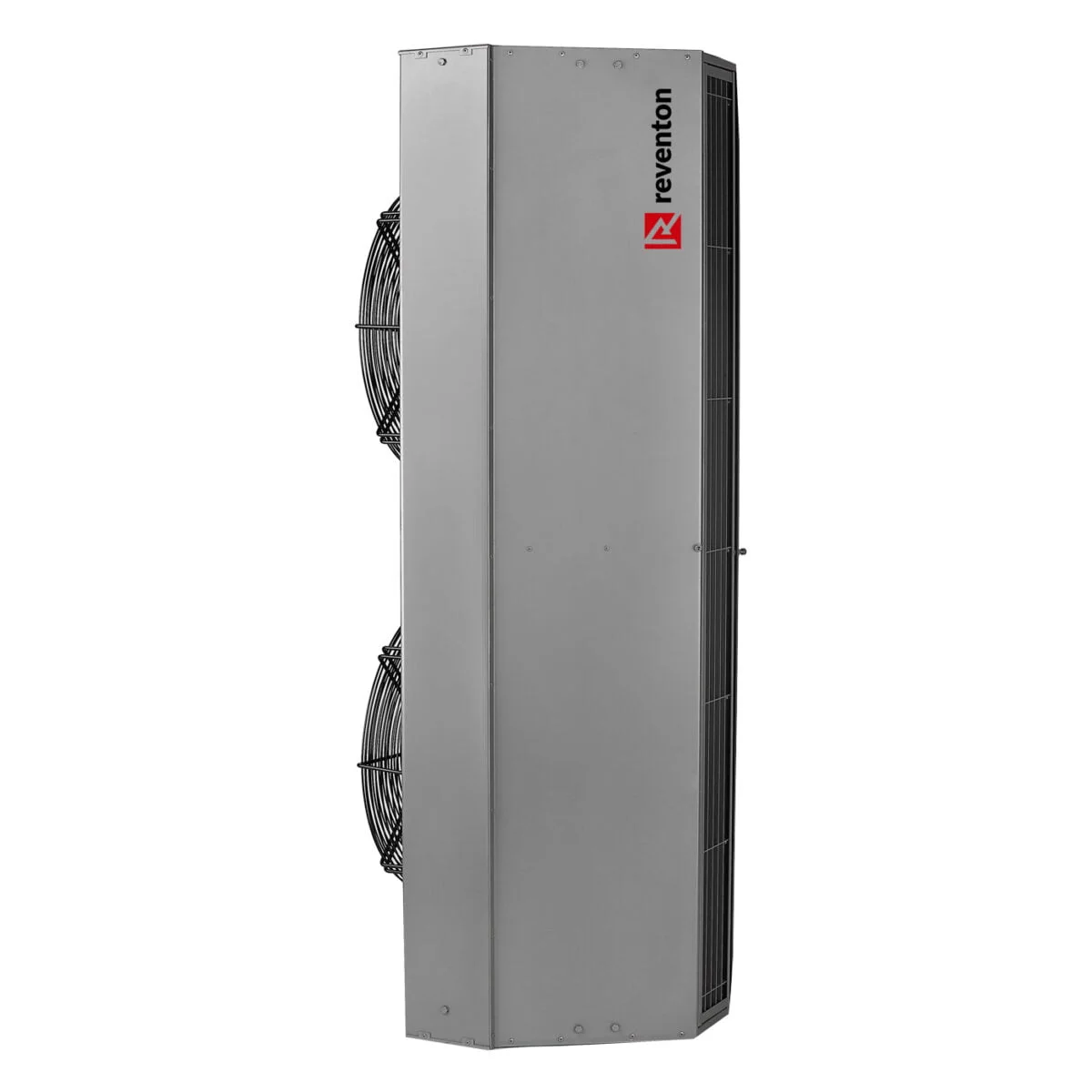
If you are wondering what else you can do to keep heat loss to a minimum, it is worth considering the installation of industrial air curtains. They create a kind of air barrier that prevents warm air from escaping through the door while it is being opened and closed, e.g., during goods delivery or unloading at the facility. For this purpose, we encourage you to check out the HUMMER series units, which we designed specifically with the needs of effective warehouse and logistics center heating in mind.
HUMMER series industrial air curtain
Control systems — how to program the devices for practically maintenance-free operation?
Appropriate control systems must be used for the devices described above. The three-speed AC motors of the LPHW unit heaters should be temperature-controlled (i.e., depending on the difference between the actual room temperature and the required one) using an HC3S speed controller with a thermostat or an HMI controller. For the single-speed AC motors powering the TORNADO series destratification fans, it is recommended to use the HMI SINGLE controller operating in destratification mode. It switches on the devices if the temperature difference between the upper and lower zones of the room exceeds a set value. HUMMER industrial air curtains, on the other hand, should operate according to the door sensor signals—meaning they turn on when the door opens and turn off when it closes. The sensor can be connected to the HMI CURTAIN controller, which manages the operation of the air curtain and an optional shut-off valve. All HMI controllers allow for the integration of the devices with a smart Building Management System (BMS). More solutions in the field of device automation can be found here.
If you need a professional selection of equipment for a specific building, our specialists will help you choose the right devices.